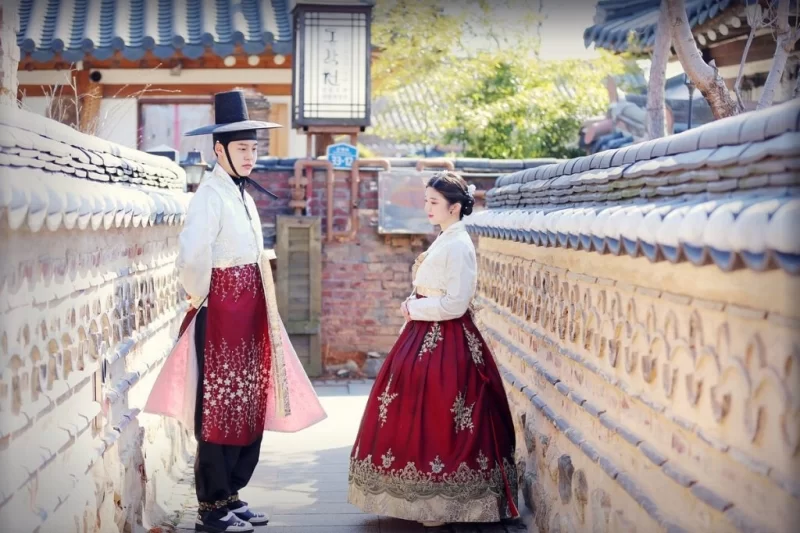
How dating works in Korean culture
Dating in Korean culture is shaped not only by personal feelings but also by strong social structure and cultural expectations. Relationships are often viewed as part of a broader life path rather than a purely private or casual experience, which influences how people approach romance from the beginning.
In many cases, relationships start through friends, social circles, or organized introductions rather than spontaneous encounters. As dating progresses, it is commonly understood as a serious step that may eventually lead toward long-term partnership or marriage, especially in adulthood. Several cultural features define how dating functions in Korea:
- Structured relationship progression — dating is often seen as a gradual process with clear stages and expectations
- Social influence — family background and social environment can indirectly shape partner choice and relationship direction
- Moderated public behavior — couples tend to express affection more subtly in public compared to many Western cultures
- Symbolic milestones — anniversaries such as “100 days together” are often celebrated as meaningful relationship markers
- Emphasis on responsibility — career stability and personal maturity are viewed as important signals of readiness for commitment
Another important aspect is the balance between emotion and social expectation. While personal attraction matters, long-term compatibility and social approval often play a supporting role in relationship development. This makes dating more structured, with an emphasis on seriousness and long-term potential. The conclusion is clear: Korean dating culture blends emotional connection with social responsibility. It is a system where relationships develop through both personal feelings and cultural expectations, creating a more structured and goal-oriented approach to romance.
Korean Dating Explained Through Social Norms
Korean dating culture is deeply shaped by social norms, where relationships are not viewed purely as private emotional experiences but also as part of a wider social structure. The way a couple behaves, communicates, and progresses is often indirectly influenced by expectations from family, friends, and society as a whole.
In this context, reputation and social perception matter. Dating is not only about personal feelings but also about how the relationship fits within accepted cultural behavior. This creates a more structured and cautious approach to romance compared to many more individualistic cultures. Key social norm influences in Korean dating include:
- Collective awareness — relationships are often considered within the framework of family and social opinion
- Public restraint — couples tend to show affection in a controlled and socially appropriate way
- Respect-based interaction — politeness and consideration are prioritized in communication styles
- Gradual relationship development — pacing is influenced by social comfort rather than only emotional intensity
- Community integration — early dating stages may involve awareness of friends or family approval
This system encourages balance between personal emotion and social responsibility. Couples are often careful not to act in ways that could disrupt harmony or attract unnecessary attention, which naturally shapes how intimacy develops over time. The conclusion is clear: Korean dating is guided by social norms that emphasize respect, moderation, and collective awareness. These values shape not only how relationships begin but also how they evolve, creating a culturally structured path toward emotional connection.
Korean Relationship Traditions and Expectations Explained
Korean relationship traditions are shaped by a cultural understanding that dating is often not just a personal experience, but a structured step toward long-term commitment. This influences how people interpret intentions, behavior, and compatibility from the very beginning of a relationship.
One of the key features is the expectation of seriousness early on. Relationships are often approached with the assumption that they may lead toward marriage, which naturally affects how quickly emotional investment develops and how carefully partners evaluate each other’s long-term suitability. Key cultural expectations in Korean relationships include:
- Commitment-oriented mindset — dating is frequently viewed as preparation for long-term partnership rather than casual interaction
- Role-based expectations — men are often associated with stability and responsibility, while women are traditionally linked with emotional care and support, though modern views are evolving
- Indicators of readiness — career stability, financial security, and emotional maturity are commonly seen as signs of suitability
- Symbolic relationship milestones — celebrations like the “100-day anniversary” reinforce commitment and emotional continuity
- Family and social influence — relationships may be indirectly shaped by approval or awareness of family and community expectations
Another defining element is the relatively fast transition toward future-oriented thinking. Couples may discuss long-term plans earlier than in more casual dating cultures, reflecting the idea that emotional connection should align with life direction and compatibility. The conclusion is clear: Korean relationship traditions combine emotional connection with structured expectations. This creates a dating environment where respect, responsibility, and long-term vision guide relationship development, balancing personal feelings with cultural stability.
Dating Culture in Korea and Communication Style Explained
Korean dating communication is built on subtlety rather than direct expression. Instead of openly stating emotions in a straightforward way, partners often rely on context, behavior, and tone to understand each other. This reflects a cultural preference for harmony, where maintaining emotional balance is often considered more important than explicit verbal clarity.
In this system, meaning is frequently carried through indirect expression. Feelings are shown through actions rather than direct declarations, and understanding often depends on reading between the lines. Because of this, emotional awareness and attentiveness become essential parts of interaction. Key characteristics of communication in Korean dating include:
- Indirect emotional expression — affection is often demonstrated through actions instead of direct statements
- Non-verbal interpretation — tone of voice, pauses, and body language carry strong emotional meaning
- Harmonized conflict management — disagreements are often softened or delayed to preserve relationship stability
- Polite and respectful language use — even in close relationships, respectful speech patterns remain important
- Social awareness in interaction — communication often considers how behavior may be perceived by others
This communication style creates a relationship dynamic where emotional understanding develops gradually. Instead of fast or explicit exchanges, closeness is built through consistency, sensitivity, and shared context. The conclusion is clear: Korean dating communication prioritizes subtlety and emotional restraint. While it may appear indirect, this style supports long-term stability by emphasizing respect, awareness, and relational harmony over immediate emotional expression.
Korean Dating Habits in Everyday Life Explained
Korean dating habits are closely tied to everyday routines, where relationships naturally blend with work responsibilities, family expectations, and social structure. Rather than existing separately from daily life, dating is integrated into a busy and organized schedule, which shapes how couples interact and maintain closeness. Because of demanding work culture and limited free time, couples often plan meetings in advance and prioritize moments when both partners are available. This makes time together more intentional, with emotional value placed on even small opportunities to connect.
Communication also plays an important role in maintaining closeness. Regular messages throughout the day help preserve emotional connection even when physical meetings are not possible. These ongoing interactions create a sense of presence and involvement in each other’s lives. Small details carry strong emotional meaning in this context. Remembering preferences, important dates, or simple daily habits becomes a way of showing care and attentiveness. At the same time, external responsibilities such as family expectations or social obligations often influence scheduling and require flexibility from both partners.
Overall, consistency is one of the most important elements in Korean dating life. A steady pattern of communication and effort is often interpreted as seriousness and emotional reliability, reinforcing trust between partners. The conclusion is clear: Korean dating habits are shaped by structure and routine. By integrating emotional connection into everyday life, relationships become more stable, intentional, and grounded in mutual responsibility.
Also worth reading: Dating rules people follow even if they don’t admit it
Korean Relationship Psychology and Emotional Restraint Explained
Korean relationship psychology places strong emphasis on emotional restraint as a sign of maturity and emotional stability. Instead of expressing feelings in intense or highly dramatic ways, partners are expected to demonstrate care through controlled, consistent, and thoughtful behavior. This creates a relationship environment where stability is valued more than emotional intensity.
Emotional restraint in this context does not mean suppressing feelings, but rather shaping how they are expressed. Maintaining calm communication during disagreements, showing patience in sensitive moments, and respecting personal boundaries are all considered indicators of emotional intelligence. Such behavior reduces unnecessary tension and helps preserve harmony between partners. Trust in relationships develops gradually through repeated evidence of reliability. Small but consistent actions—such as honoring commitments, paying attention to details, and maintaining steady communication—become more meaningful over time than emotional outbursts or strong verbal declarations. This slow accumulation of trust builds a stable emotional foundation.
The conclusion is clear: Korean relationship psychology values balance over intensity. Emotional restraint supports trust-building, encourages long-term stability, and allows intimacy to grow in a controlled and sustainable way, where connection is formed through consistency rather than emotional extremes.
Dating Customs in Korea from a Long-Term Perspective
Looking at Korean dating customs through a long-term lens shows that relationships are often built with future stability in mind rather than being treated as short-term experiences. Dating is commonly seen as a developmental stage that can naturally progress toward a committed partnership, where emotional connection and life planning grow together over time.One defining feature is the importance of shared milestones. Couples often attach meaning to specific time markers, using them as symbolic checkpoints that reinforce continuity and seriousness in the relationship. These moments help transform time spent together into a structured emotional journey rather than a casual progression.
Gift exchange also plays a subtle but meaningful role. Rather than focusing on material value, gifts are often used to express attention, care, and emotional awareness. This reinforces connection through consistent small gestures rather than occasional large expressions. Family awareness is another important aspect. Relationships may gradually extend beyond the couple itself, with family perception and approval carrying indirect influence. This reflects a broader cultural view that relationships exist within a social framework, not only between two individuals.
Over time, couples naturally begin to synchronize their lifestyles. Daily routines, communication habits, and shared activities become more aligned, creating stability and predictability in the relationship. Alongside this, conversations about future goals such as career direction or long-term plans often emerge earlier than in more casual dating systems. The conclusion is clear: Korean dating customs are designed around gradual development and long-term continuity. Through rituals, shared habits, and future-oriented thinking, relationships evolve in a structured way where emotional closeness and life planning grow together into lasting commitment.
Taking time to share little photos of your daily routine, morning coffee, and funny moments helps bridge the geographic distance between two people effortlessly. If you want a companion who truly appreciates steady, caring communication throughout the week, consider exploring where to meet attractive and loyal European ladies online.